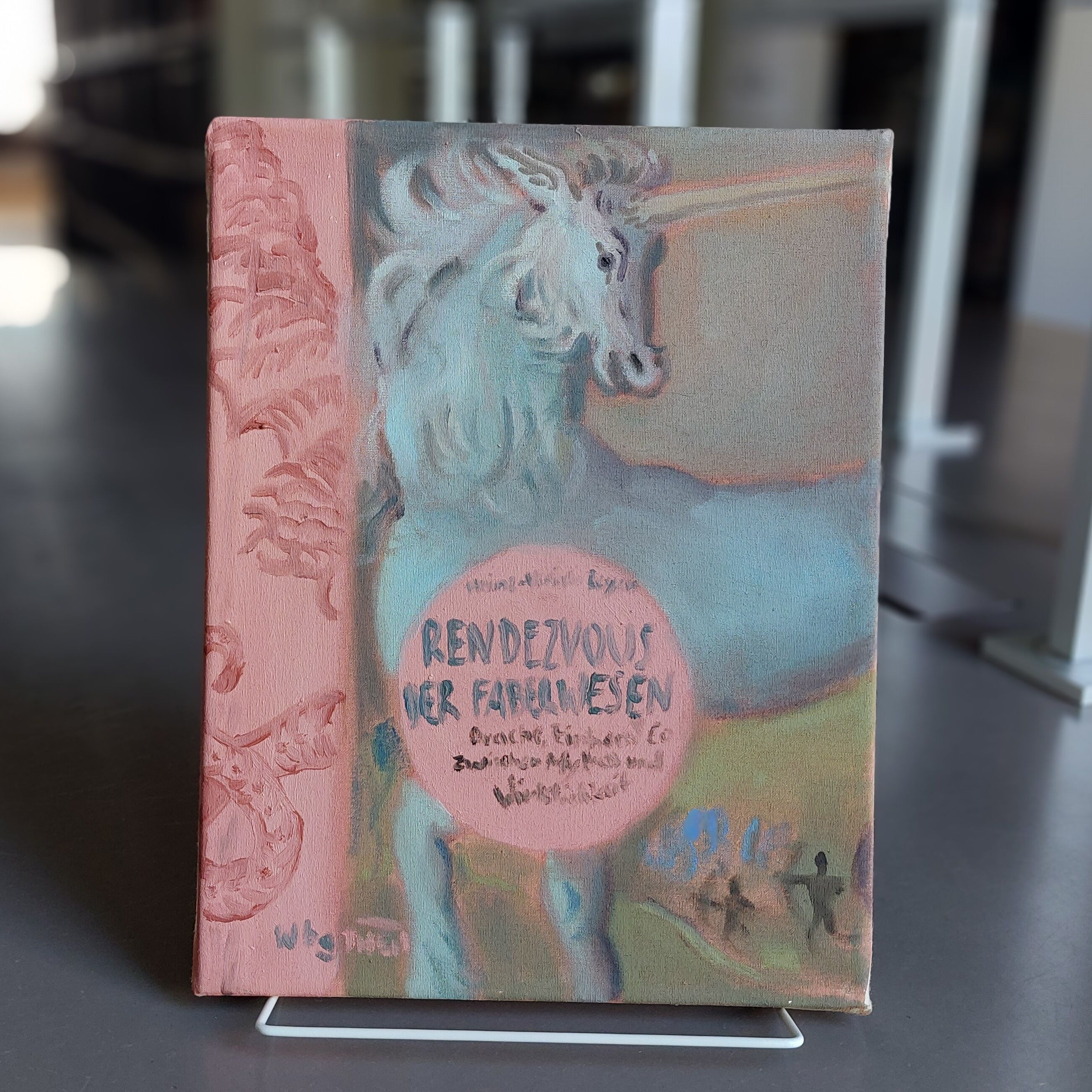
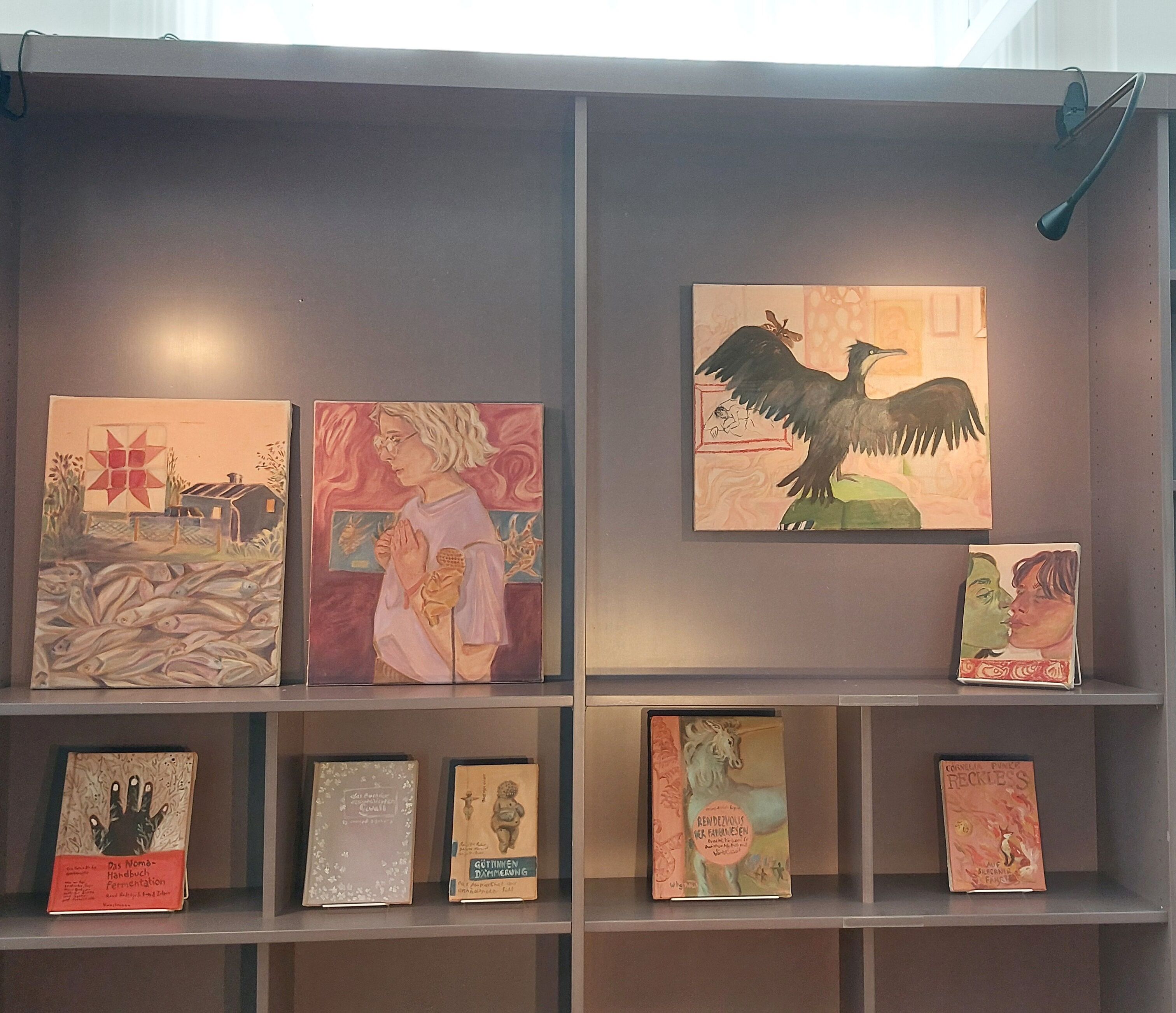
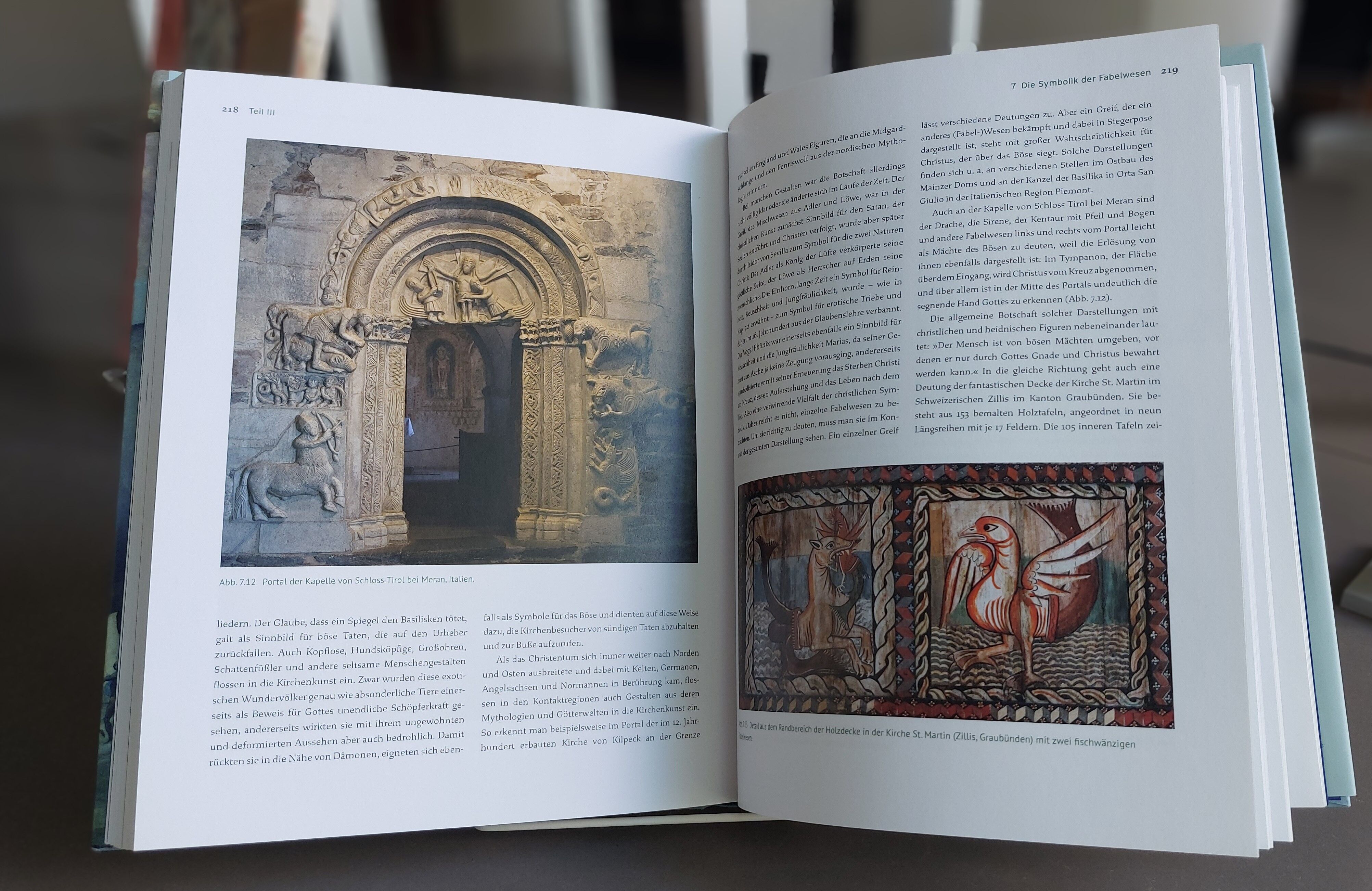
A search on the internet for “Books on the bedside table” returns results such as “Reading in bed”, “Angels by the bed” or even “The monster under my bed”. One of the books that probably lay by Richter’s bed for a very long time was “Rendezvous of Mythical Creatures: Dragons, Unicorns & Co. Between Myth and Reality” by Heinz-Ulrich Reyer. On the one hand, because she had requested this book as a purchase suggestion for the library, and on the other, because a small painting of the book’s cover bears witness to her fascination with it.
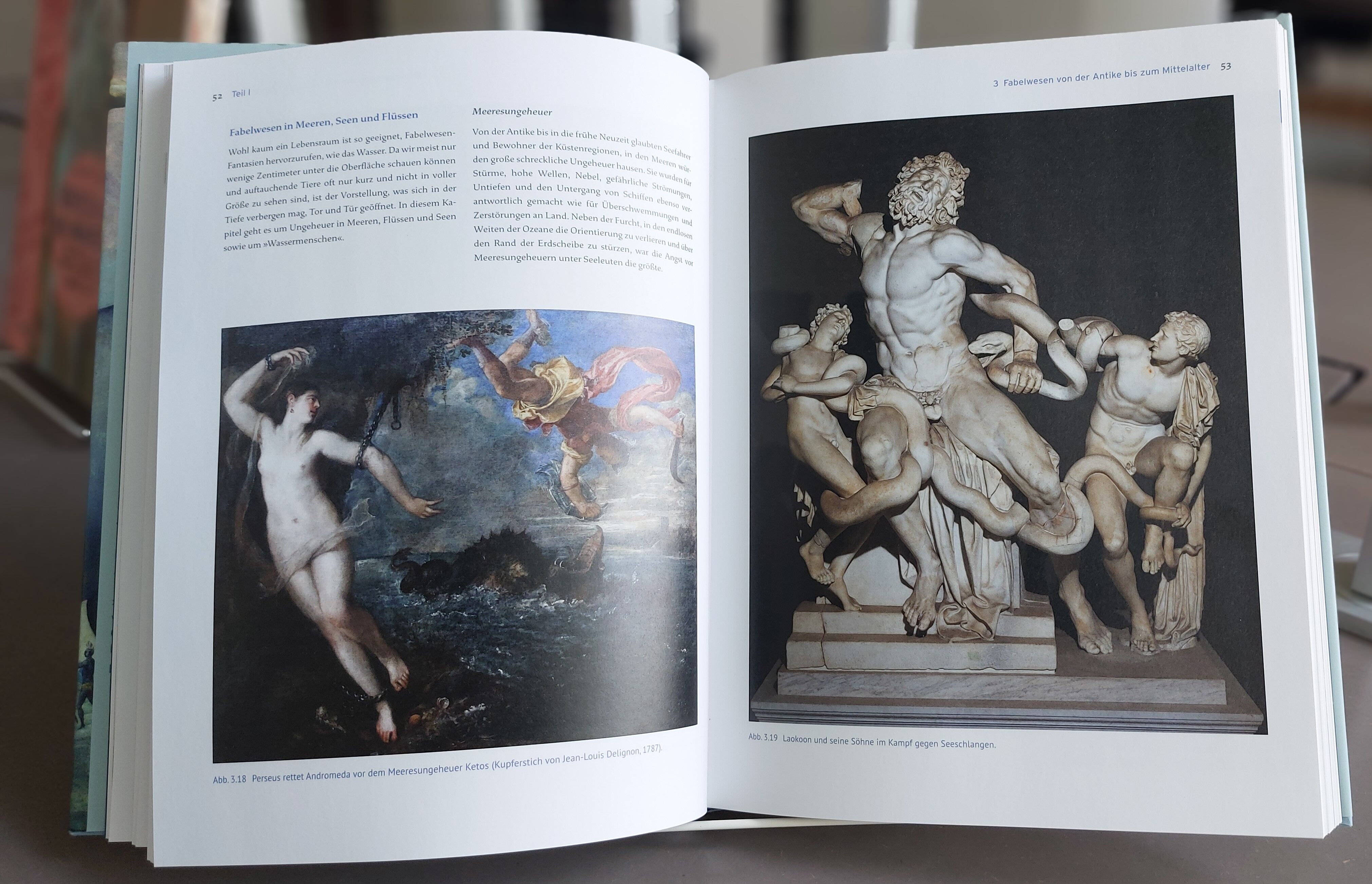
The book traces the origins of mythical creatures. In doing so, it compares cultural and historical traditions with biological realities, taking into account the respective religious, moral, social and political contexts. The first part of the book presents animal and human creatures in the context of their myths of creation, religions, ancient civilisations and medieval travel accounts. The following chapter is devoted to the scientific study of these creatures and explores why mythical creatures continue to enjoy widespread popularity today, even though there is no conclusive evidence of their real existence.
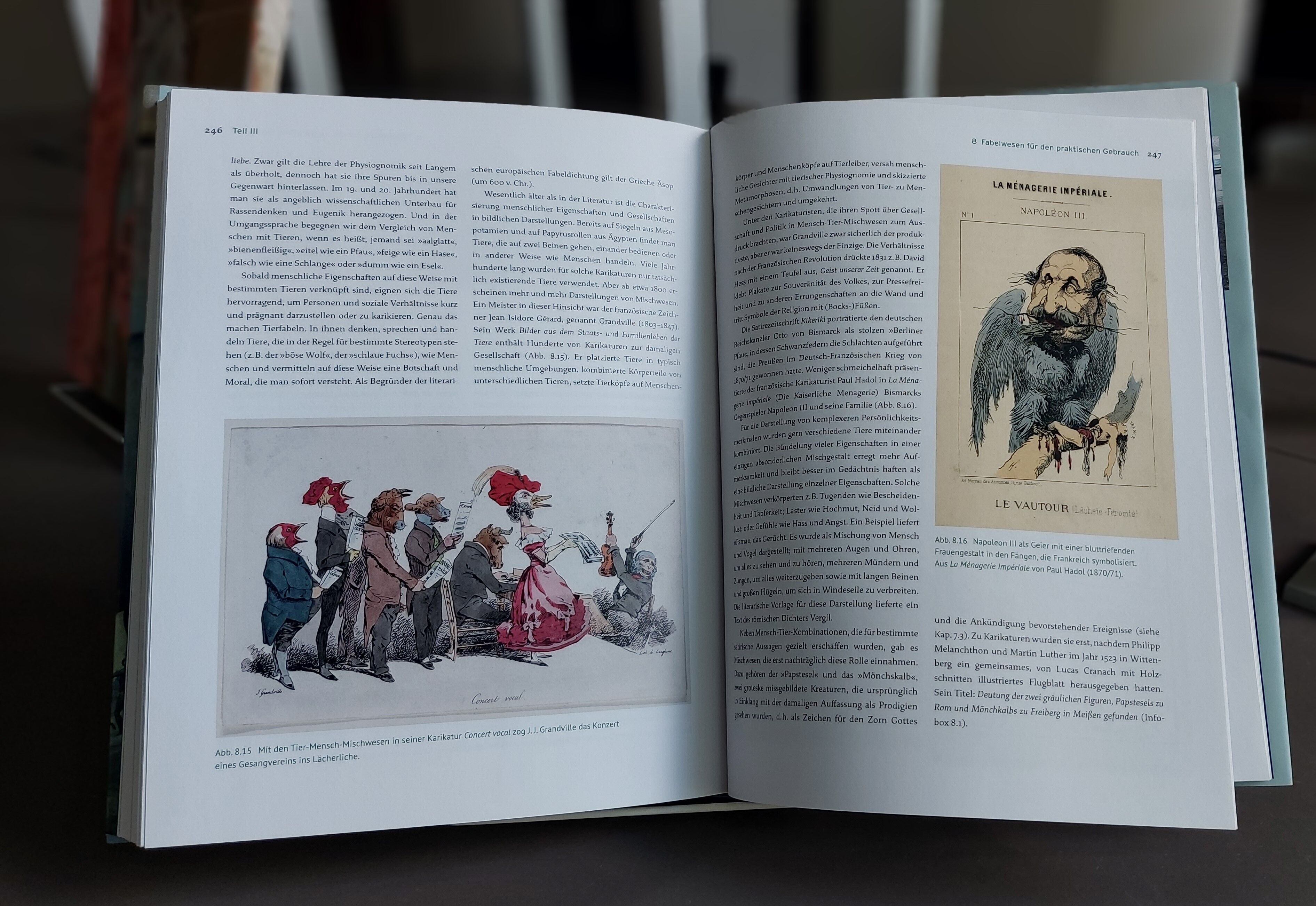
In the following chapter, the author speaks of a veritable menagerie of mythical creatures. The variety of animal or human forms, animal-human hybrids and even continuous metamorphoses knows no bounds. Systematic interviews with eyewitnesses were used in an attempt to track down these creatures. Yet even with this methodology, no reliable, scientifically substantiated proof of the existence of these creatures could be provided. The explanations for the lack of evidence were, and remain, manifold. Thus, the chapter ‘Deception and Self-Deception’ deals with forgeries intended to prove the existence of mermaids, ape-men, seven-headed dragon-like creatures, sea serpents and the like. Ultimately, the author concludes that ‘mythical creatures are pure constructs of our imagination’.
In the concluding chapter, the author looks to the future and asks why myths and mythical creatures still play a role even today. The focus is on the symbolism of these creatures and what they represent. For example, the dragon can symbolise chaos or good fortune. A Chinese New Year parade without dragons seems unthinkable, for after all, one needs good fortune in the new year. In Christian iconography, the angel represents something good and the devil is the epitome of evil. In works of fine art or in architectural façade designs there are not only biblical figures, but also creatures from ancient pagan religions and mythologies. And even in contemporary literary works such as J. R. R. Tolkien’s “The Hobbit”, J. K. Rowling’s “Harry Potter”, or in films such as “Star Wars”, “Aliens”, and “Gremlins”, we encounter new creatures that continue and fuel our fascination with these mythical beings.
And so, in conclusion the question arises: which book is on your bedside table?