
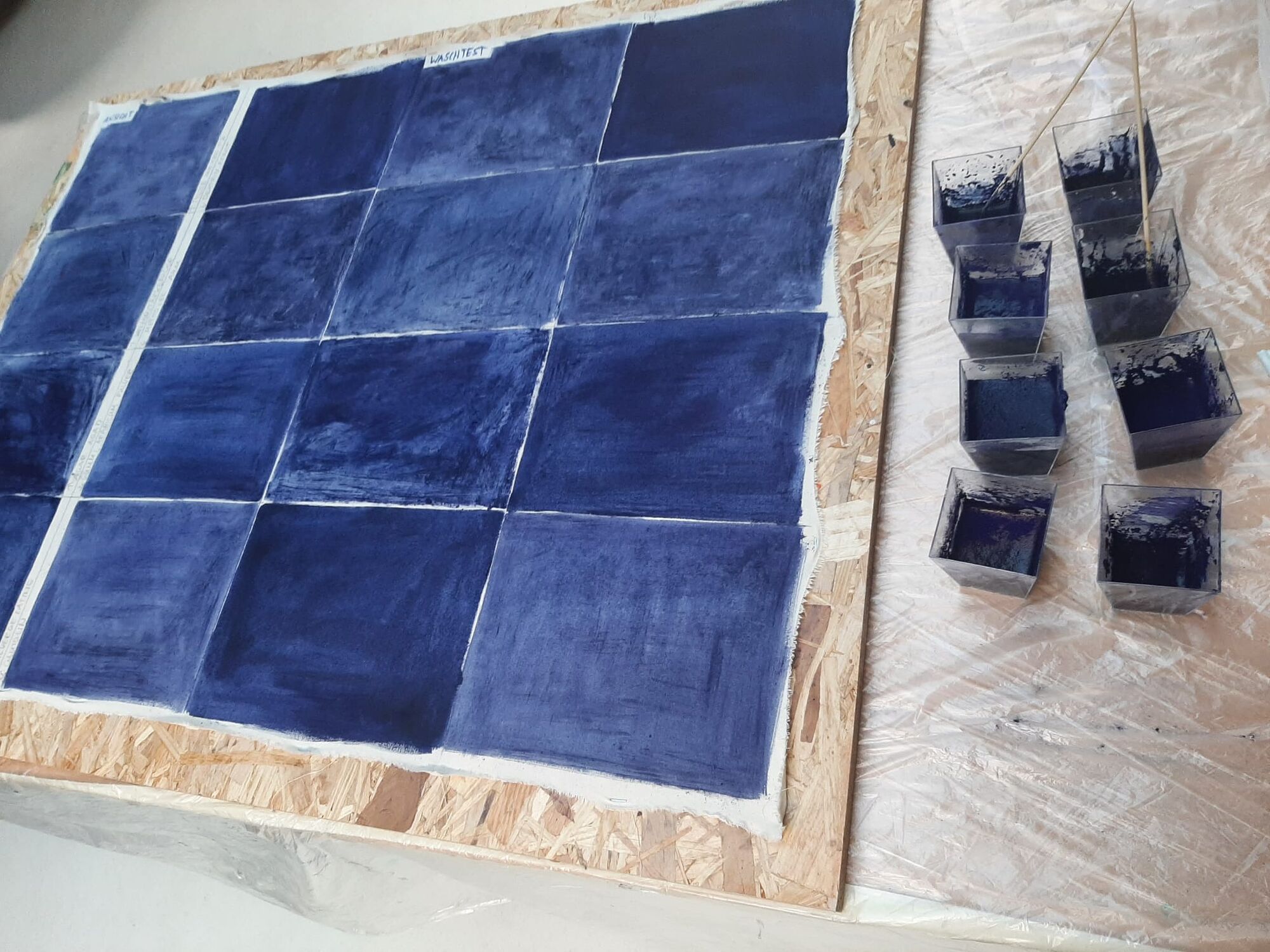
The performing arts often function as a place for debate and catalysts for change within our society. In addition to the aspect of entertainment they discuss current pending issues trying to provide solutions. However, in the field of sustainability, apart from the use of modular stage elements such as platforms or mobile exhibition walls, the performing arts have some catching up to do, as there is often not enough time to consider alternatives in depth. Budgets are often not planned accordingly or custom-made products are necessary due to artistic decisions. In addition, the systems currently in use offer little possibility for designing spatial dynamics with organic and flexible structures. As producers of temporary buildings, renowned theaters have to deal with enormous disposal and recycling processes, high storage capacities and a changing personnel structure. The independent theater scene faces high travel and transportation costs due to the guest performance system. Textile room modules can be realistic solutions for these issues, as they can be reduced to a minimal packing size. Supplemented by a flexible and reversible use of paint and dyes, they open up a wide range of design options that are intended to support process-based and collaborative work at the theater. In the context of art, sustainable thinking is often limited to the use of secondary materials, which are then sent to their usual disposal cycle. Their use has therefore only been extended by one or at most three cycles. It is necessary to expand the research into and development of structures that take into account the long-term circular use of materials.
![[Translate to Englisch:] Kreisförmige Grafik zur Visualisierung von Forschungsfragen](/fileadmin/_processed_/c/e/csm_1410-rescene-Forschungsfragen_8fdc3b87c6.png)
![[Translate to Englisch:] Schatten und wehende textile Bühnenelemente](/fileadmin/_processed_/9/8/csm_Poster_Banner_329e88f046.jpg)
Information on the Conference
To mark the conclusion of the project, which has been running since 2024, we are bringing together the results of our work on modular, circular spatial systems made of textiles. The project has yielded adaptable spatial configurations for theater settings and temporary architecture; these are intended for use among other applications as a productive interplay between experimentation and reuse within the context of theater design education.
With "FABRICating circular systems," we aim to gather artists and researchers whose work operates at the intersection of textiles and space, and who view sustainability as a design principle and cultural practice. We invite contributions from the fields of art, academia, theater, architecture, and related disciplines. The daytime program will feature specialist lectures alongside panel discussions on sustainable production in the performing arts and academic work within artistic research projects.
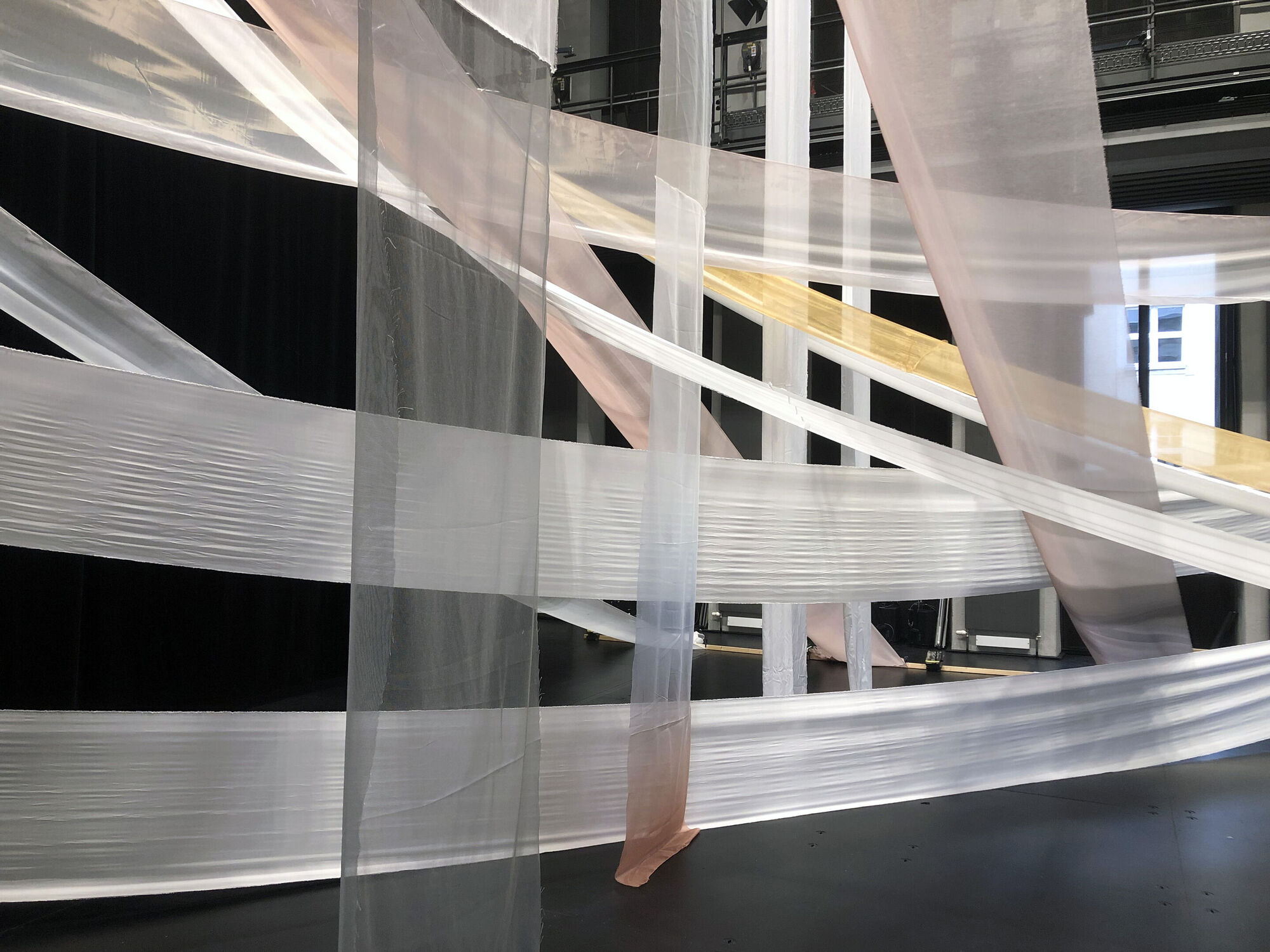
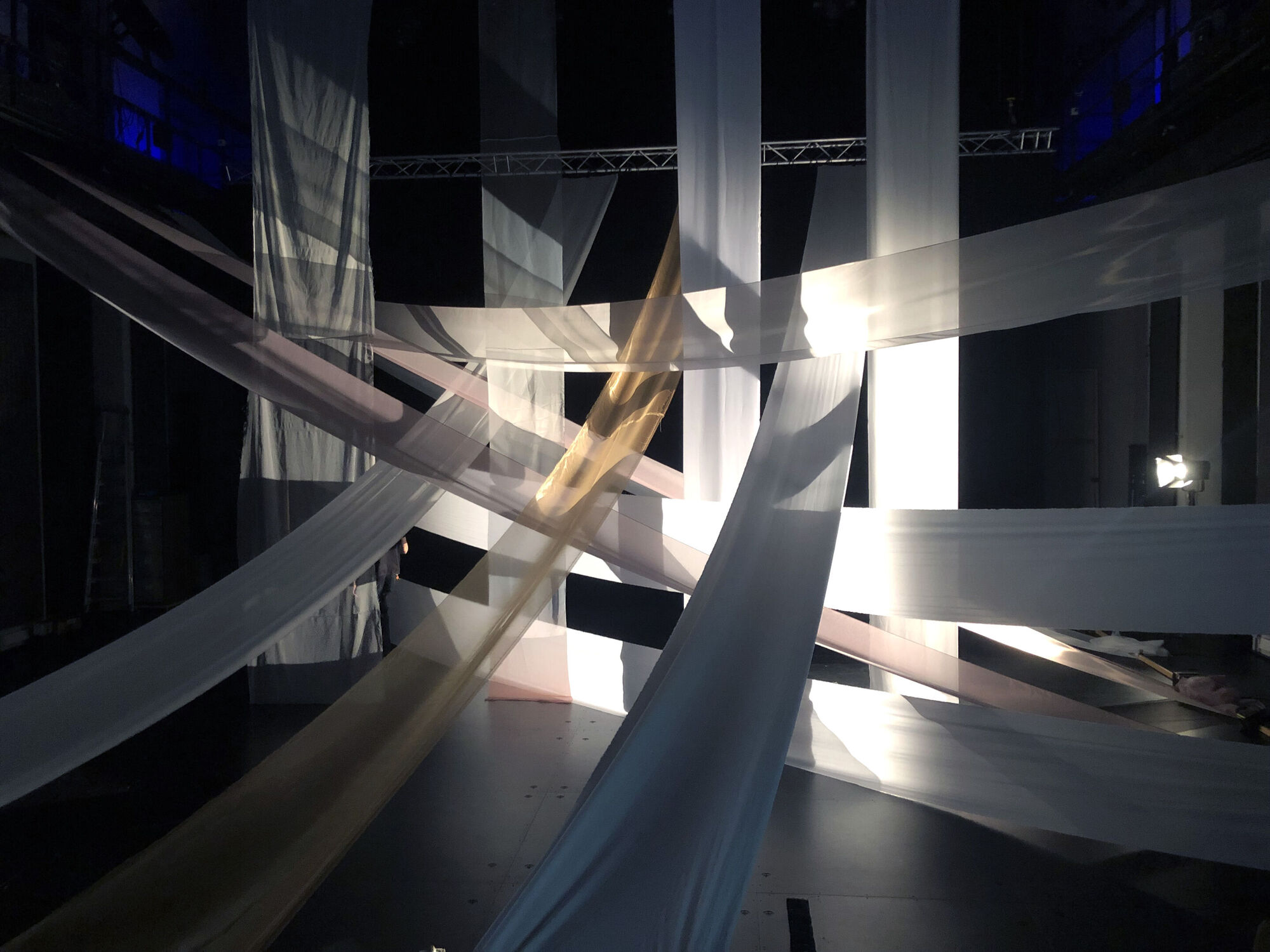
For the evening program, the multimedia studio Noclip will perform within a textile space designed by rescene. This continuation of our collaborative work explores the circular use of materials, focusing on the decomposition of plastiglomerates—stones formed from plastics and sediments—by microorganisms. For further information, please visit: plastiglomerates dresden — STUDIO NOCLIP
When: November 5 & 6, 2026
Where: Dresden Academy of Fine Arts (HfBK), Güntzstraße 34, 01307 Dresden
Conference Registration
Please email us at resceneconference@hfbk-dresden.de, indicating whether you wish to attend on one or both days and whether you plan to attend the performance. As space is limited, we recommend early registration.
Performance Registration
If you wish to attend only the evening event SPECIMENS No. 33-42: DRESDEN PLASTICRUSTS, please also send an email to resceneconference@hfbk-dresden.de specifying your preferred date.
Accessibility
Please let us know in advance if you require any accessibility accommodations.
Catering
Will be provided on-site.
Over the course of the two-day conference, artists and researchers from various disciplines will present their work on the creation of spatial environments using textiles. The first day focuses on "textile spaces," while the second shifts the spotlight to "spatial textiles" as a deliberate change in perspective moving from the concept of space to the material itself.
On the first day, in addition to the presentation of our research findings, contributions regarding the use of textiles in architecture will be showcased bringing us from historical origins to modern interpretations. Furthermore, the relationship between body and space will be examined through the lenses of softness and performativity. Speakers addressing these topics include Sylvie Krüger, Aura Luz Melis (Studio Inside Outside), Prof. Gabi Schillig (UdK), and Prof. Dr. Alex Schweder (Pratt Institute). In the afternoon, Prof. Wolf Gutjahr (HS Mainz) discusses the sustainable use of textiles in theater productions with Eva Veronica Born, Ralph Zeger (Landesbühnen Sachsen), Lisa-Marie Hobusch (Schaubühne Berlin), and students from HfBK Dresden.
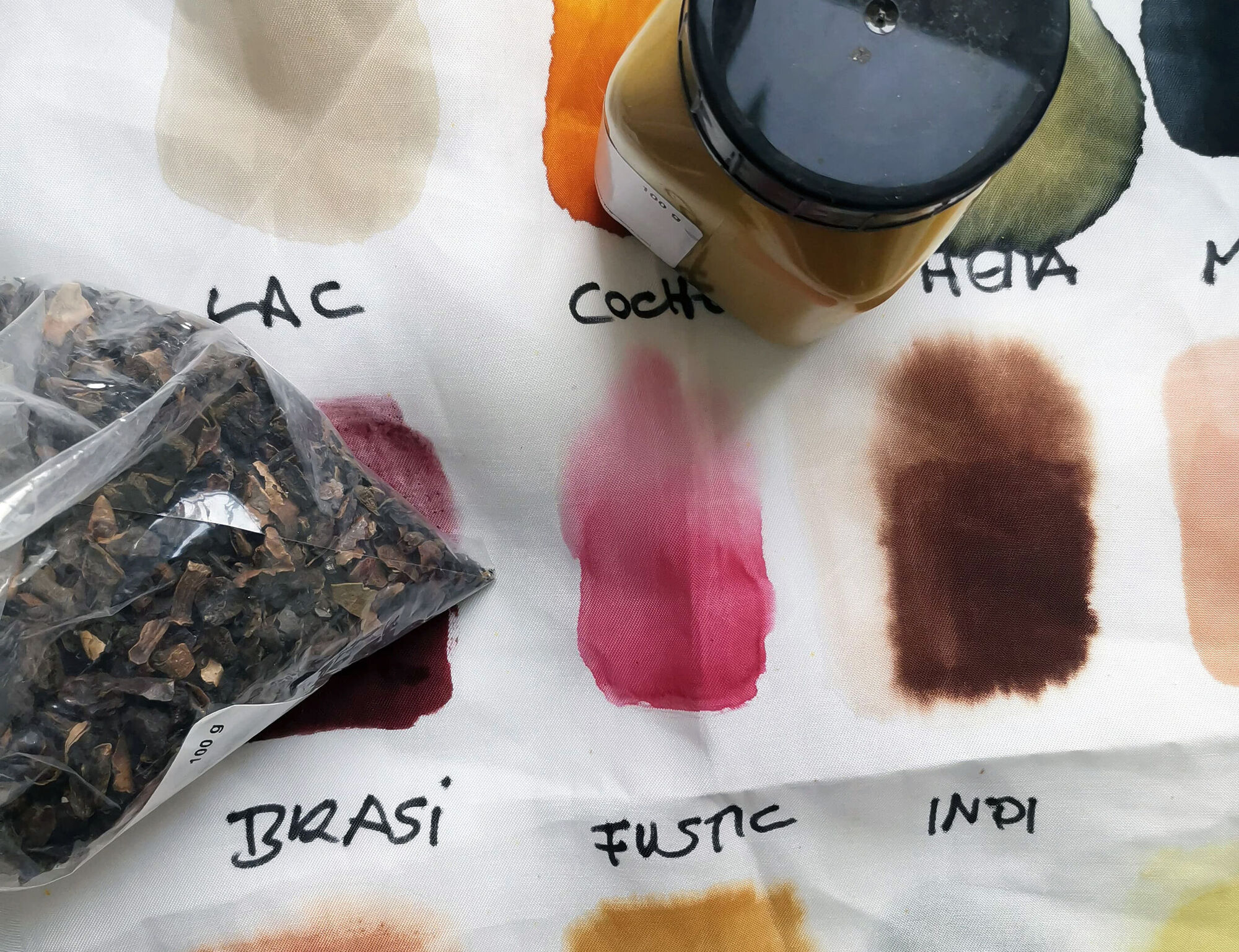
The second day focuses on spatial textiles. Presentations will cover the sustainability of various fibers, three-dimensional weaving techniques, the digital mediation of haptic materials, and artistic works created from collected fabrics treated with natural dyes. Contributors include Prof. Dr. Markus Oberthür (HAW Hamburg), Kathryn Walters (IE University Madrid), Reto Pulfer, and Prof. Dr.-Ing. habil. Sybille Krzywinski (TU Dresden). In the afternoon, Prof. Dr. Christiane Sauer (Weißensee Kunsthochschule Berlin) and Henrike Schmitz (Burg Giebichenstein Kunsthochschule Halle) report on the significance of textile research projects at their respective institutions.
In the evenings, Studio Noclip presents its new work SPECIMENS No. 33-42: DRESDEN PLASTICRUSTS as part of its "Plastiglomerates Series." This performance series is dedicated to investigating recently discovered hybrid rock formations composed of melted plastic and natural sediment. As testaments to the "strange times" in which we live (to use Morton’s terminology), these materials symbolize both fascination and concern regarding the accelerated changes of our planetary epoch. The third chapter of the "Plastiglomerates" series focuses on experimental methods for decomposing plastics and transforming them into organic matter. The work is conceived as a post-dramatic music-theater performance that operates in the tension between laboratory, museum and theater space. In this hybrid environment, speculative scientific processes are carried out in real time, turning decomposition into both the subject and the method of the performance.

A retrospective at our exhibition at the Long Night of Science
Final Conference: FABRICating Circular Systems
Review of our exhibition at the university’s summer festival
Thinking through Materialities
Rückblick auf unsere erste Live-Testung
Juni 2025
Werkschau 2025
July 19. 2025 from 16 Uhr
Güntzstraße 34, Raum 221
Appearance with Ventum S in May 2025
![[Translate to Englisch:] Quadratisches Bild mit sechs Kacheln, zu sehen sind Portraits der Projektmitarbeiter*innen und Atelieransichten](/fileadmin/user_upload/Downloads/Lehre-Forschung/Forschung/2410-rescene-insta-prev.jpg)
Questions and input
Do you belong to a cultural institution, a theatre, an independent group and are interested in our project? Or do you have information for us that should not be missing from the project? Then please contact us via the project manager Prof Maren Greinke. You will find the contact address below. We look forward to any form of suggestion!
Offer for students of the HfBK Dresden
Are you planning a project with textiles, do you need advice on choosing materials or have you found something you really want to show us? Then please contact us using the addresses below. You can find the respective research focus in the researchers section. Just see whose focus suits your project best and write to us. We look forward to hearing from you!
Team
Akhavan, Samira
Research Project RESCENE
Email: | akhavan@hfbk-dresden.de |
Göhler, Marie
Theaterdesign | Theater- und Veranstaltungstechnik
Email: |
Hilpert, Sonia
Theatre Design | Scenic Painting | Painting Scenic Space & Architecture
Email: | hilpert@hfbk-dresden.de |
Lötzsch, Vera
Theaterdesign | Scenic Painting & Project Coordination
Email: | loetzsch@hfbk-dresden.de |
- Prof. Maren Greinke, Theatre Design/Scenic Painting, project management
- Gisa Bigl, secretariat theatre design, project administration
- Katharina Langsdorff, student assistant
- Anni Kreher, student assistant
- Lena Tausche, student assistant
Former Team Members
- Sarah Blech, former artistic researcher, project coordination, scenic painting
- Sebastian Schrader, former artistic collaborator, stage design and technology
- Josefin Britt, former student assistant
- Linda Kromer, former student assistant
- Lara Mück, former student assistant
- Helena Schmidt, former student assistant
Project counseling/ practice partner
- Prof. Olaf Lauströer, Architecture/Interdisciplinary Interior Design, project consultancy
- Prof. Wolf Gutjahr, Scenic Space, Mainz University of Applied Sciences
- Prof. Bri Newesely, Theatre and Event Technology BHT Berlin
- Dresden State Theatre
- Textile Research Institute Thuringia-Vogtland e. V., Special Textiles and Flexible Materials, Textile Structures Group
![[Translate to Englisch:] Bühnenbild](/fileadmin/_processed_/7/b/csm_B___hnenbild_f___r_Specimen_No._6__01_56cdd7b1ed.jpg)
![[Translate to Englisch:] Farbproben auf einem Tisch.](/fileadmin/_processed_/9/e/csm_Ausstellung_zum_Sommerfest_2025_01_95d16032b7.jpg)
![[Translate to Englisch:] Materialproben für Vorhänge](/fileadmin/_processed_/6/2/csm_Ausstellung_zum_Sommerfest_2025_02_40d5eb4d83.jpg)
![[Translate to Englisch:] Bühnenbild](/fileadmin/_processed_/3/a/csm_B___hnenbild_f___r_Specimen_No._6__02_7e20d6a14d.jpg)
![[Translate to Englisch:] Bühnenbild](/fileadmin/_processed_/1/a/csm_B___hnenbild_f___r_Textile_Landscapes_9ea054cd82.jpg)