The Arctic is warming four times faster than the rest of the planet; what happens in the Arctic does not stay in the Arctic; permafrost represents a methane time bomb in our climate system – these are the rhetorical claims of politicians, Arctic scientific leadership, and the media. Some of these statements are true, some are meaningless, or distorted. As climate scientists, ecologists, and other concerned scientists try to get the message across, it is clear that people care, but nothing is really happening. The CO2 level in the atmosphere is the metric that tells the truth about humanity's inaction. Many scientists have come to realise that the traditional scientific narratives and evidence do not reach the right people, and when they do, they do not convert the level of danger into meaningful action. Some have turned to new narratives by collaborating with artists, documentarians, musicians, and other creative collaborators. Mostly what we have seen is climate art, climate fiction, and documentaries that stir emotions, but the outcome is the same, with some serious anxiety on top. How can scientists, artists, and the public build dialogues that bring about real change? Change that is measured by reducing the rate of increase and ultimately reducing CO2 emissions from humanity to effectively zero. This is an intergenerational problem, but a vision for the future must start today.
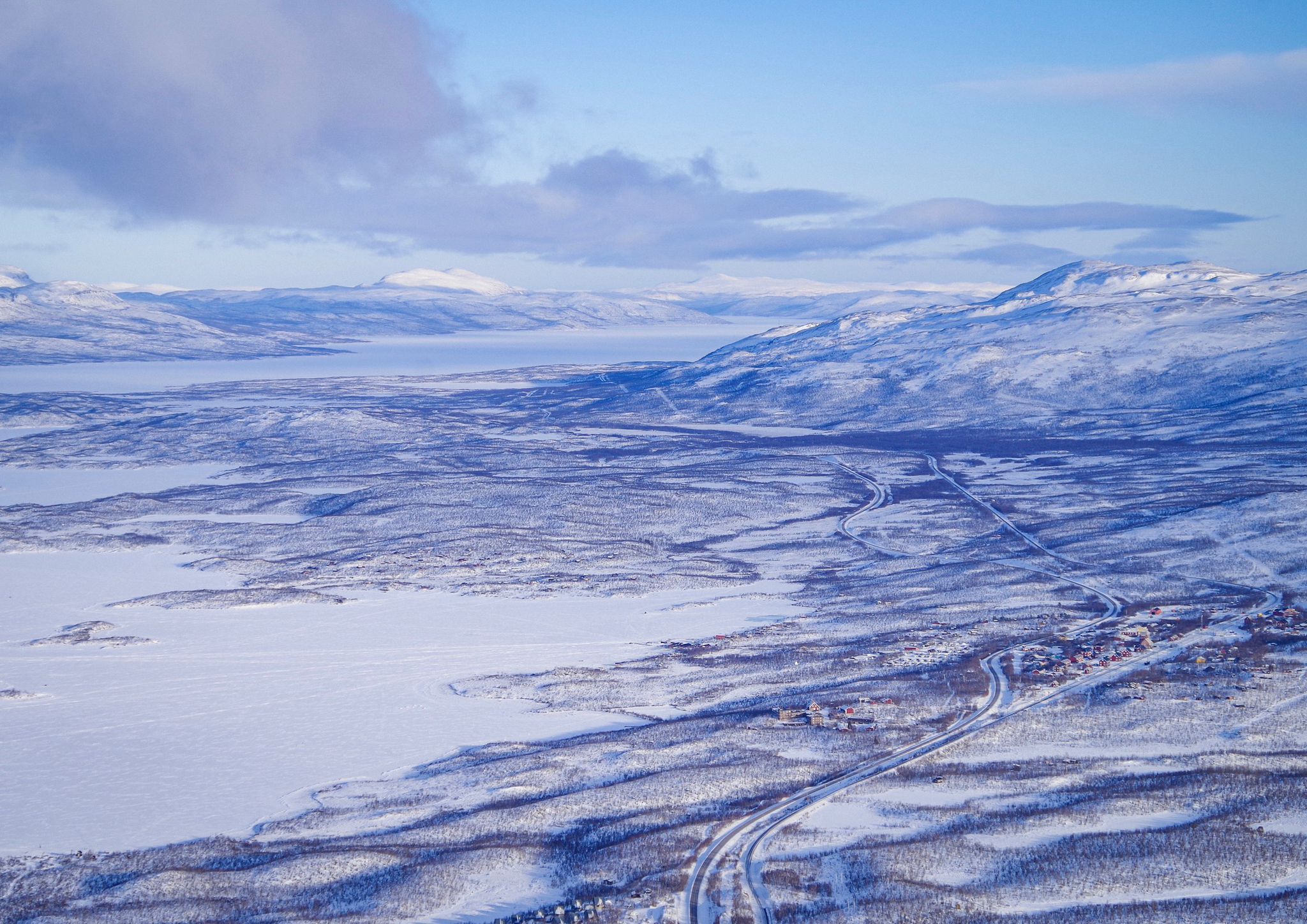
Am selben Abend stellen außerdem die Designer Freddy Adelmann, Lena Porath and Maja Bäumker ein Buch, dass sie auf der schwedischen Forschungsstation in Abisko entwickelt haben:
“Something’s happening in Abisko – A visual archive of Arctic Science”
Bio
Keith Larson, PhD, is an internationally recognized Arctic research, education, and policy leader. He is the Director of the Arctic Centre at Umeå University and is the new host of the European Polar Board and European Polar Coordination Office from 2025. He drives inter- and transdisciplinary collaborations that address societal, environmental, and geopolitical challenges in the Arctic and the Polar regions. His research integrates Indigenous knowledge and Western science to understand climate change impacts, such as Arctic greening, biodiversity shifts, and their effects on Arctic communities. Through his leadership, he fosters global partnerships through collaborative initiatives like the Arctic Six, the European Polar Board, the International Arctic Science Committee, and UArctic. He leads public engagement efforts, including citizen science programs and high-profile media projects such as a recent segment on Arctic pollinators in BBC Frozen Planet II. Under his guidance, the Arctic Centre thrives as a hub for inter- and transdisciplinary research, advancing sustainable development and evidence-based policymaking in the Polar regions. He has international leadership experience with the Arctic Six, the European Polar Board, and the UArctic.